Volunteering and health: how helping others affects you
Social Connection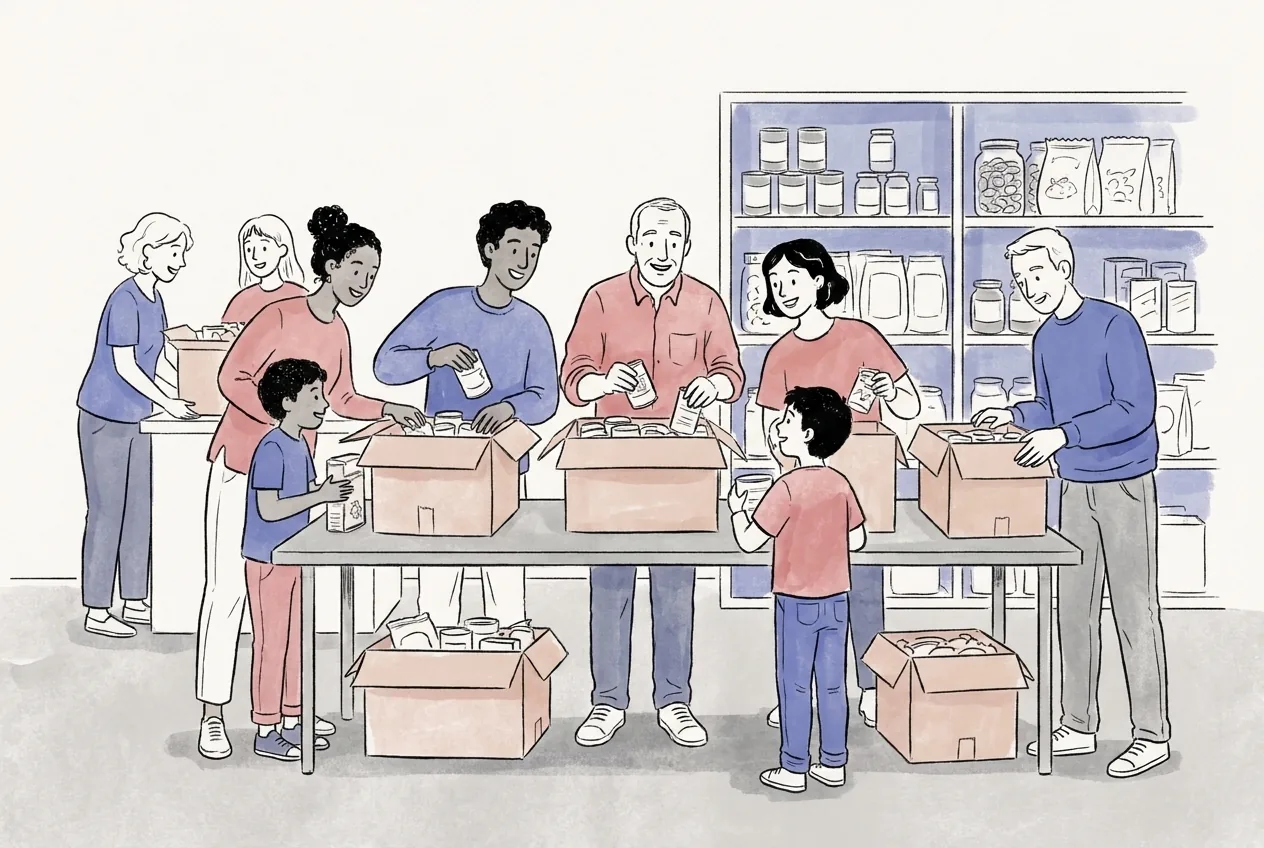
Key points
- Systematic review: volunteering is linked to better mental well-being and 22% lower mortality.
- Meta-analysis in older adults: 24% lower risk of death after adjusting for other factors.
- Randomized trials are less clear, so cause and effect are not proven.
- Avoid overload: volunteering should support you, not drain you.
Helping others, helping yourself?
About a quarter of U.S. adults volunteer through an organization each year. Volunteering creates social connections and purpose, both linked to better health.
What the research shows
Systematic review. A review of 40 studies found that volunteering was linked to lower depression, higher life satisfaction and well-being and a 22% lower risk of death in cohort studies. Randomized trials, however, did not show clear effects on physical or mental health (Jenkinson et al., 2013).
Older adults. A meta-analysis of 14 studies found that older adults who volunteered had a 24% lower risk of death than non-volunteers after accounting for health and other factors (Okun et al., 2013).
Why it may work
- social contact and new relationships (Holt-Lunstad et al., 2010);
- purpose and meaning;
- staying physically and mentally active.
Limits of the evidence
Healthier people may be more likely to volunteer, which can inflate the association.
How to start without burning out
- Choose a cause you care about.
- Start with a small, regular commitment.
- Say no when you need to.
- Volunteer with friends or family.
Frequently asked questions
How much volunteering is helpful?
Studies of older adults suggest benefits from as little as a couple of hours a week.
Where can I find opportunities?
Try VolunteerMatch, AmeriCorps Seniors, local food banks, libraries, schools, hospitals and faith communities.
Sources
- Jenkinson et al. (2013). Is volunteering a public health intervention? A systematic review and meta-analysis of the health and survival of volunteers. BMC Public Health 13(1). doi:10.1186/1471-2458-13-773
- Okun et al. (2013). Volunteering by older adults and risk of mortality: A meta-analysis.. Psychology and Aging 28(2):564-577. doi:10.1037/a0031519
- Holt-Lunstad et al. (2010). Social Relationships and Mortality Risk: A Meta-analytic Review. PLoS Medicine 7(7):e1000316. doi:10.1371/journal.pmed.1000316
Keep reading
 Social Connection
Loneliness as a health risk: what you should know
How loneliness and social isolation are linked to mortality, heart disease and stroke, who is most at risk and what helps.
 Social Connection
Family meals: why eating together matters for health
What meta-analyses show about family meals, children’s weight, healthy eating and disordered eating, and how to make shared meals happen.
 Social Connection · Guide
Social connection and health: why relationships are a pillar of health
How relationships, support and community are linked to longevity and heart health, what meta-analyses show and where to start.
Related topics from other pillars
 Stress
Music and stress: what meta-analyses show
What a meta-analysis of more than 100 studies found about music, psychological stress, heart rate and cortisol, and how to use music to unwind.
StressSocial support as a buffer against stress
What the classic stress-buffering hypothesis says, how perceived support protects health and why asking for help is a skill.
Social Connection tools
Three-item loneliness scale (UCLA-3)
Three questions used in major U.S. studies of loneliness.
QuizDe Jong Gierveld loneliness scale (6 items)
Measures emotional and social loneliness.
QuizOslo Social Support Scale (OSSS-3)
Three questions about who you can count on.
PDF · WorksheetMy connections map
A worksheet for mapping your social network and planning contact.
PDF · Tracker"One get-together a week" tracker
A monthly tracker of social contact.
PDF · CardsFamily dinner conversation cards
24 questions for phone-free conversation at the table.