Social connection and health: why relationships are a pillar of health
Social Connection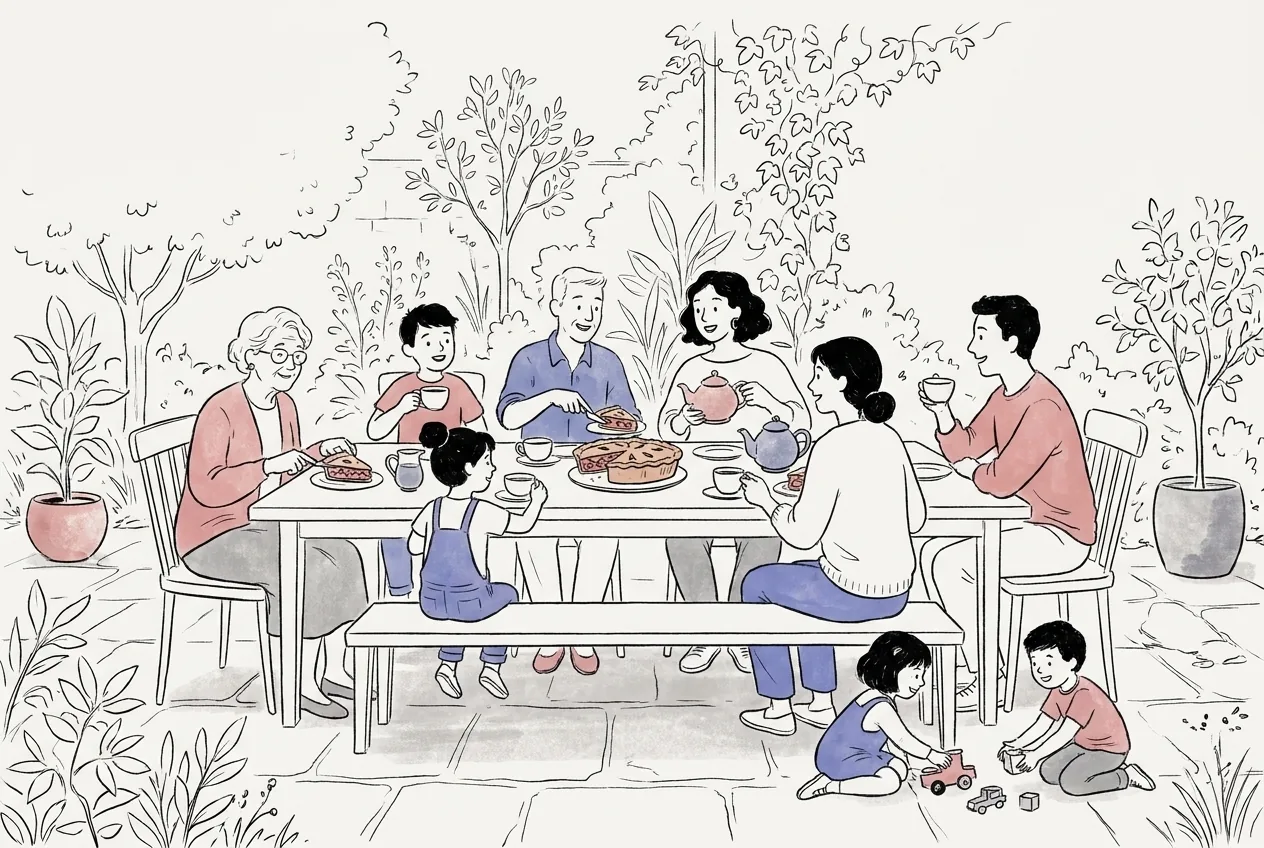
Key points
- Meta-analysis of 148 studies: strong social relationships are linked to about 50% higher odds of survival.
- Social isolation, loneliness and living alone are linked to a 26% to 32% higher risk of death.
- Poor social relationships are linked to a 29% higher risk of coronary heart disease and a 32% higher risk of stroke.
- Quality and a sense of support matter more than the number of contacts.
Relationships are not a “soft” topic
We tend to think health depends on food, exercise and medication. But research shows that the quality of our relationships is linked to how long we live as strongly as classic risk factors. That is why the U.S. Surgeon General issued an advisory on the epidemic of loneliness and isolation in 2023, the WHO launched a Commission on Social Connection, and lifestyle medicine treats relationships as a separate pillar.
What the research shows
A meta-analysis of 148 studies. Pooling data from more than 300,000 people, researchers found that those with stronger social relationships had about 50% higher odds of survival over the study period (7.5 years on average). The size of this association was comparable to other well-known risk factors such as smoking (Holt-Lunstad et al., 2010).
Loneliness and isolation. A follow-up meta-analysis looked at different aspects separately. Social isolation was linked to a 29% higher risk of death, loneliness to 26% and living alone to 32% (Holt-Lunstad et al., 2015).
Heart and blood vessels. A systematic review found that poor social relationships were linked to a 29% higher risk of coronary heart disease and a 32% higher risk of stroke (Valtorta et al., 2016).
How relationships affect health
There are several mechanisms:
- Behavior. People who feel supported are more likely to look after themselves: see a doctor, take their medication, stay active.
- Stress. Support softens the stress response.
- Meaning and motivation. Feeling needed helps people get through hard times.
A caveat about the evidence
These studies are observational: they show associations but cannot prove that relationships themselves are the cause. Illness may partly lead to isolation. At the same time, the associations have been reproduced consistently across many studies.
Where to start
- One call a day to someone you have not talked to in a while.
- Regular get-togethers: a shared dinner, a walk or coffee once a week.
- A community around an interest: a club, choir, sports team or faith community.
- Helping others: volunteering builds connections and purpose.
- Quality over quantity: a few close people matter more than hundreds of followers.
Elsewhere in this section: loneliness as a health risk; volunteering and health.
Frequently asked questions
How is loneliness different from social isolation?
Social isolation means objectively having few contacts. Loneliness is the subjective feeling that your relationships are not enough. You can feel lonely among many people and not lonely while living alone.
Is loneliness really as harmful as smoking?
A 2010 meta-analysis found that the effect of weak social ties on mortality was comparable to other well-known risk factors, including smoking and physical inactivity. These are observational data that show an association, not proof of cause.
What if I find it hard to meet people?
Start small: regular activities with the same people, such as a club, volunteering, a sports group or a faith community, naturally build connections.
Sources
- Holt-Lunstad et al. (2010). Social Relationships and Mortality Risk: A Meta-analytic Review. PLoS Medicine 7(7):e1000316. doi:10.1371/journal.pmed.1000316
- Holt-Lunstad et al. (2015). Loneliness and Social Isolation as Risk Factors for Mortality. Perspectives on Psychological Science 10(2):227-237. doi:10.1177/1745691614568352
- Valtorta et al. (2016). Loneliness and social isolation as risk factors for coronary heart disease and stroke: systematic review and meta-analysis of longitudinal observational studies. Heart 102(13):1009-1016. doi:10.1136/heartjnl-2015-308790
- U.S. Department of Health and Human Services. Our Epidemic of Loneliness and Isolation: The U.S. Surgeon General’s Advisory. www.hhs.gov
Keep reading
 Social Connection
Loneliness as a health risk: what you should know
How loneliness and social isolation are linked to mortality, heart disease and stroke, who is most at risk and what helps.
 Social Connection
Volunteering and health: how helping others affects you
What systematic reviews and meta-analyses show about volunteering, depression, life satisfaction and mortality, and how to start without burning out.
 Social Connection
Family meals: why eating together matters for health
What meta-analyses show about family meals, children’s weight, healthy eating and disordered eating, and how to make shared meals happen.
Related topics from other pillars
 Stress
Music and stress: what meta-analyses show
What a meta-analysis of more than 100 studies found about music, psychological stress, heart rate and cortisol, and how to use music to unwind.
StressSocial support as a buffer against stress
What the classic stress-buffering hypothesis says, how perceived support protects health and why asking for help is a skill.
Social Connection tools
Three-item loneliness scale (UCLA-3)
Three questions used in major U.S. studies of loneliness.
QuizDe Jong Gierveld loneliness scale (6 items)
Measures emotional and social loneliness.
QuizOslo Social Support Scale (OSSS-3)
Three questions about who you can count on.
PDF · WorksheetMy connections map
A worksheet for mapping your social network and planning contact.
PDF · Tracker"One get-together a week" tracker
A monthly tracker of social contact.
PDF · CardsFamily dinner conversation cards
24 questions for phone-free conversation at the table.