Pets and health: what research says about dog ownership
Social Connection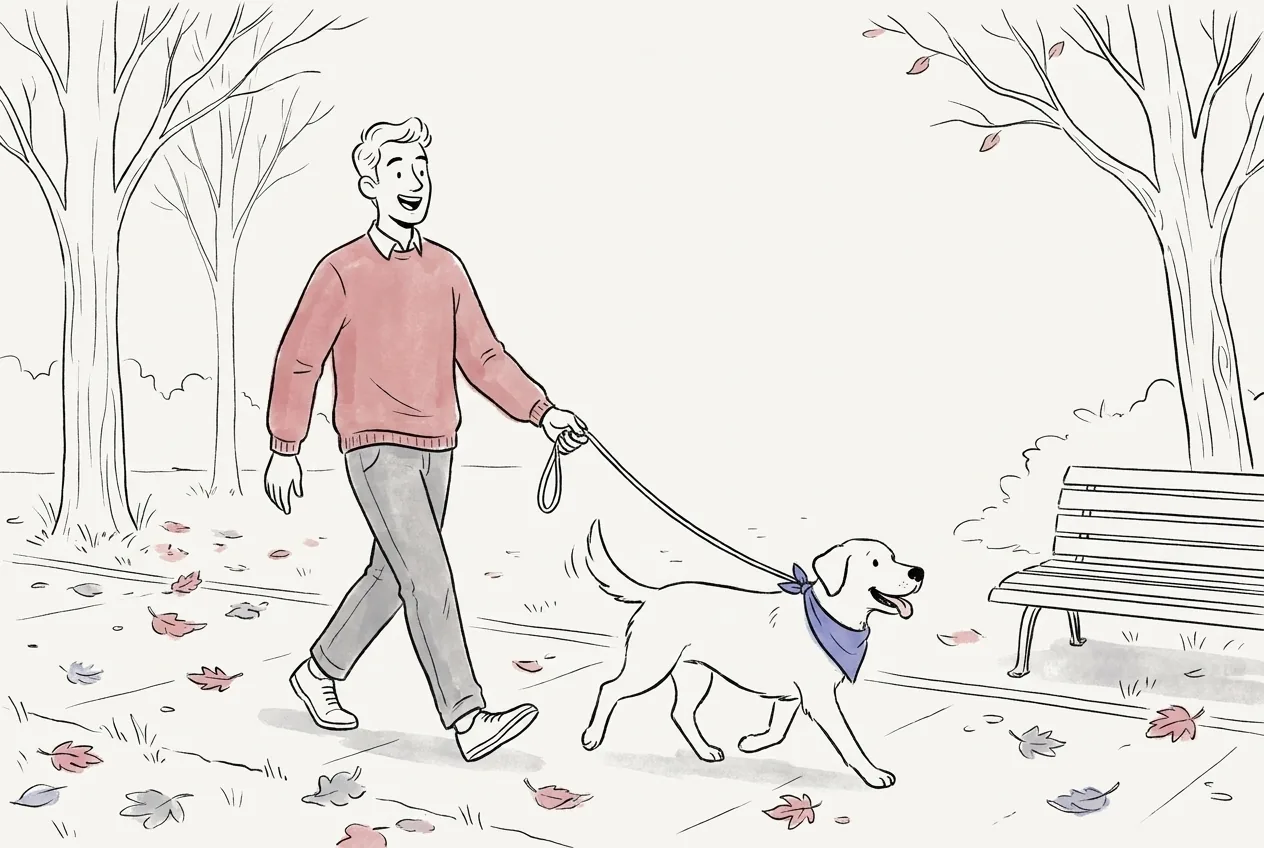
Key points
- Dog owners: 24% lower all-cause mortality.
- 31% lower cardiovascular mortality.
- After a heart attack: 65% lower mortality.
- The data are observational: healthier people may be more likely to get dogs.
What the research shows
A meta-analysis published by the American Heart Association pooled 10 studies with more than 3.8 million participants. Dog ownership was linked to a 24% lower risk of death from any cause and a 31% lower risk of cardiovascular death. Among people who had survived a heart attack, owning a dog was linked to a 65% lower risk of death (Kramer et al., 2019).
Why this may be
- Walking: dog owners walk more, and regular walking is linked to lower cardiovascular risk (Hamer & Chida, 2008).
- Less loneliness: pets provide companionship and help people meet others; loneliness is linked to higher mortality (Holt-Lunstad et al., 2015).
- Lower stress.
Caveat
These studies are observational. People who are healthier, more active or less isolated may be more likely to own dogs.
Frequently asked questions
Do cats have the same effect?
There is less research on cats, with mixed findings. Any pet that brings companionship and routine may help.
Should I get a dog for my health?
Only if you can care for it. The benefits likely come from walking, routine and companionship.
Sources
- Kramer et al. (2019). Dog Ownership and Survival. Circulation: Cardiovascular Quality and Outcomes 12(10). doi:10.1161/CIRCOUTCOMES.119.005554
- Hamer et al. (2008). Walking and primary prevention: a meta-analysis of prospective cohort studies. British Journal of Sports Medicine 42(4):238-243. doi:10.1136/bjsm.2007.039974
- Holt-Lunstad et al. (2015). Loneliness and Social Isolation as Risk Factors for Mortality. Perspectives on Psychological Science 10(2):227-237. doi:10.1177/1745691614568352
Keep reading
Couples and health: why relationship quality matters
What a meta-analysis of 126 studies found about marital quality and health, why conflict matters and what keeps relationships healthy.
Social ConnectionLoneliness, hearing loss and dementia: what you can change
What the Lancet Commission found about 12 modifiable dementia risk factors, including social isolation and hearing loss, and practical steps to lower risk.
Social Connection · Myth or factMyth or fact: introverts do not need social connection
Do introverts do fine alone? What experiments on talking to strangers found and why social connection matters for everyone regardless of temperament.
Related topics from other pillars
 Physical Activity
Walking: the simplest exercise with proven benefits
What meta-analyses show about walking, heart disease and longevity, how fast and how much to walk and easy ways to walk more every day.
 Physical Activity
Biking and walking to work: active commuting and health
What a UK study of more than 260,000 commuters found about cycling and walking to work, heart disease and mortality, and how to start safely.
Social Connection tools
Three-item loneliness scale (UCLA-3)
Three questions used in major U.S. studies of loneliness.
QuizDe Jong Gierveld loneliness scale (6 items)
Measures emotional and social loneliness.
QuizOslo Social Support Scale (OSSS-3)
Three questions about who you can count on.
PDF · WorksheetMy connections map
A worksheet for mapping your social network and planning contact.
PDF · Tracker"One get-together a week" tracker
A monthly tracker of social contact.
PDF · CardsFamily dinner conversation cards
24 questions for phone-free conversation at the table.