Night shifts: how to protect your health on shift work
Sleep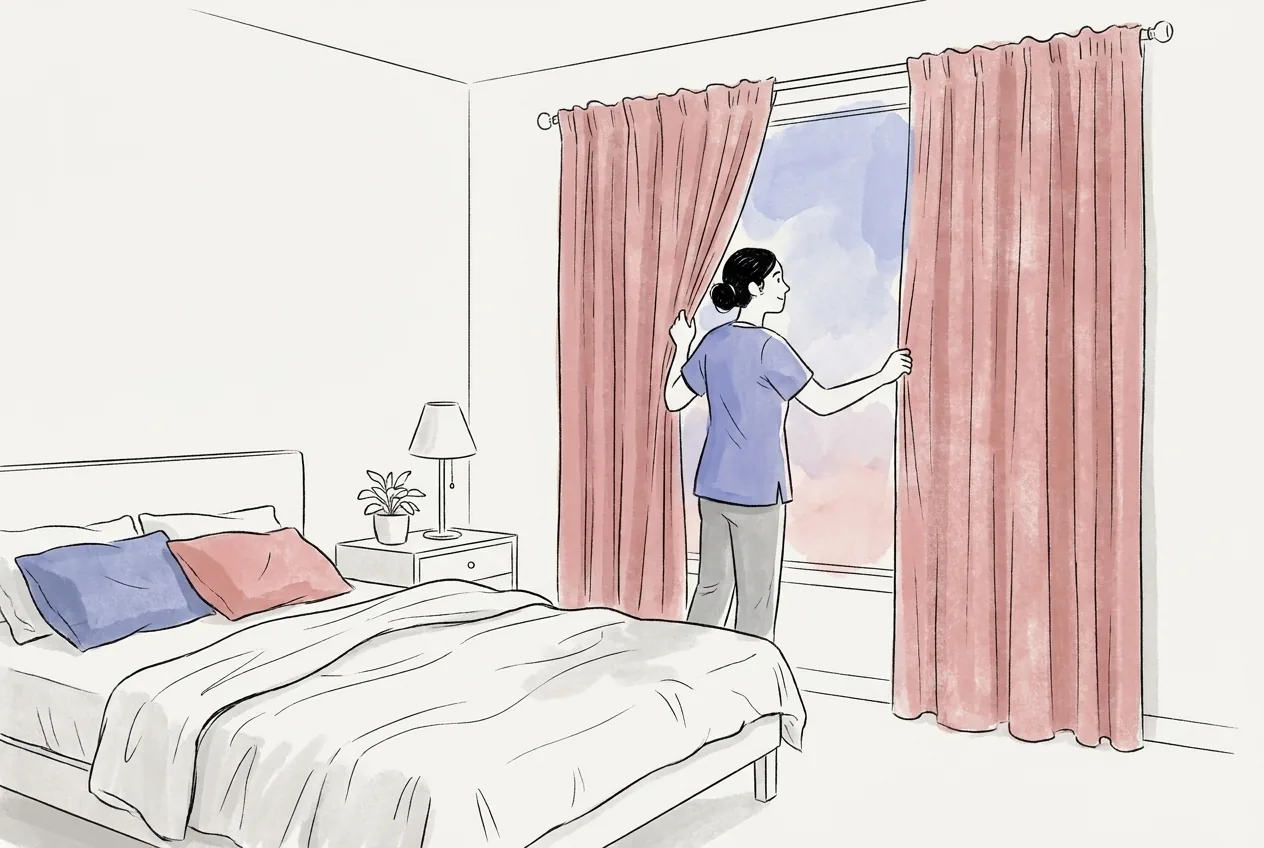
Key points
- Shift work is linked to accidents, type 2 diabetes, weight gain, coronary heart disease and stroke.
- The main mechanisms are circadian disruption and sleep loss.
- Helpful: a dark, cool bedroom, sleeping soon after your shift, managing light.
- A short nap before a night shift reduces sleepiness.
Why night work is harmful
Our body clock is designed for activity during the day and sleep at night. Night work forces people to be awake when the clock calls for sleep and to sleep when it calls for wakefulness. Shift workers also get less sleep overall. About 15 million Americans work evening, night or rotating shifts.
What the research shows
A review in The BMJ concluded that shift work is linked to higher risk of accidents and injuries, type 2 diabetes, weight gain, coronary heart disease, stroke and some cancers, mainly through circadian disruption and short, poor sleep (Kecklund & Axelsson, 2016).
Practical tips
Sleep
- Go to bed soon after your shift; use blackout curtains, earplugs or white noise.
- Protect your sleep time: silence your phone and let family know.
- A short nap of 10 to 20 minutes before a night shift can reduce sleepiness (Brooks & Lack, 2006).
Light
- Use bright light during the first part of your shift.
- Wear sunglasses on the way home in the morning.
Caffeine and food
- Use caffeine early in the shift, not in the last few hours (Gardiner et al., 2023).
- Eat your main meal before the shift and light snacks during it.
Frequently asked questions
Should I sleep right after a night shift?
For most people, yes: go to bed as soon as possible after getting home, in a dark, quiet room.
Is it safe to drive home after a night shift?
Drowsy driving is dangerous. If you are very sleepy, take a short nap before driving or use other transportation.
Sources
- Kecklund et al. (2016). Health consequences of shift work and insufficient sleep. BMJ :i5210. doi:10.1136/bmj.i5210
- Brooks et al. (2006). A Brief Afternoon Nap Following Nocturnal Sleep Restriction: Which Nap Duration is Most Recuperative?. Sleep 29(6):831-840. doi:10.1093/sleep/29.6.831
- Gardiner et al. (2023). The effect of caffeine on subsequent sleep: A systematic review and meta-analysis. Sleep Medicine Reviews 69:101764. doi:10.1016/j.smrv.2023.101764
Keep reading
Early birds and night owls: chronotype and social jet lag
What a chronotype is, how social jet lag between workdays and weekends affects health and how natural light can shift your body clock earlier.
SleepSleep and memory: how the brain locks in learning overnight
How deep sleep and REM sleep help consolidate memories and skills, what naps add and why all-nighters before exams backfire.
SleepSleep and immunity: why short sleep raises your risk of colds
What a viral challenge study found about sleep duration and catching a cold, how sleep affects vaccine response and how to support immunity with sleep.
Related topics from other pillars
Sleep tools
How much sleep do you need? Recommendations by age
Recommendations from the American Academy of Sleep Medicine and the National Sleep Foundation.
QuizSocial jet lag calculator
The difference in your sleep midpoint between workdays and days off.
QuizWhen should you stop drinking coffee? Calculator
According to a meta-analysis, have a regular coffee at least about 8.8 hours before bed.
PDF · DiaryTwo-week sleep diary
Record bedtime, wake time, awakenings, caffeine, alcohol and how you feel.
PDF · TrackerMonthly 24-hour sleep tracker
A visual sleep rhythm tracker that shows your schedule and social jet lag.
PDF · ChecklistBedtime routine checklist
A step-by-step wind-down routine with a weekly tracker.