Early birds and night owls: chronotype and social jet lag
SleepKey points
- Chronotype is partly genetic and changes with age.
- Social jet lag is the difference in sleep timing between workdays and days off.
- It is linked to smoking, alcohol, caffeine and higher body weight.
- A week of camping with natural light shifted the body clock about 2 hours earlier.
What a chronotype is
Some people naturally wake early and feel best in the morning (“larks”); others feel most alert in the evening (“owls”). Chronotype is partly inherited and changes with age: children are early, teens and young adults later, and older adults earlier again.
Social jet lag
Researchers coined the term “social jet lag” for the difference between the midpoint of sleep on workdays and on free days. People with larger social jet lag were more likely to smoke and to drink more alcohol and caffeine (Wittmann et al., 2006). In a large population study, social jet lag was also linked to higher body mass index (Roenneberg et al., 2012).
Light is the main regulator
In a study by the University of Colorado, people spent a week camping with only natural light and no electric lighting. Their melatonin rhythm shifted about 2 hours earlier, and evening owls became much more like morning larks (Wright et al., 2013).
In practice
- Get outdoor light within an hour of waking.
- Dim lights and screens in the evening.
- Keep your wake time within about an hour on weekends.
- If possible, schedule demanding work at the time of day you feel best.
Frequently asked questions
Can I change my chronotype?
Your genetic tendency stays, but light exposure, regular wake times and meal timing can shift your body clock by an hour or two.
Why are teens night owls?
Body clocks shift later in adolescence. That is one reason the American Academy of Pediatrics recommends school start times of 8:30 a.m. or later.
Sources
- Wittmann et al. (2006). Social Jetlag: Misalignment of Biological and Social Time. Chronobiology International 23(1-2):497-509. doi:10.1080/07420520500545979
- Roenneberg et al. (2012). Social Jetlag and Obesity. Current Biology 22(10):939-943. doi:10.1016/j.cub.2012.03.038
- Wright et al. (2013). Entrainment of the Human Circadian Clock to the Natural Light-Dark Cycle. Current Biology 23(16):1554-1558. doi:10.1016/j.cub.2013.06.039
Keep reading
Sleep and immunity: why short sleep raises your risk of colds
What a viral challenge study found about sleep duration and catching a cold, how sleep affects vaccine response and how to support immunity with sleep.
 Sleep
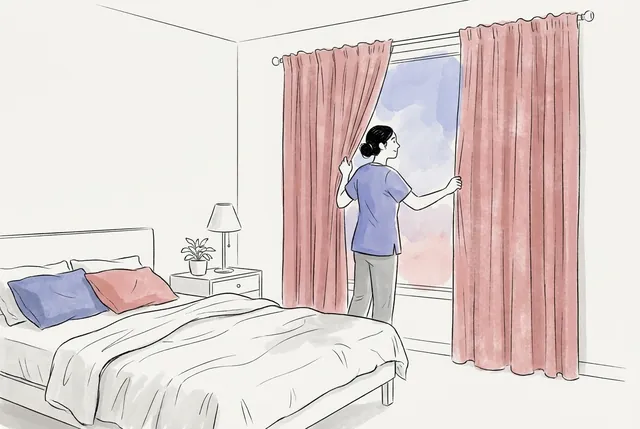
Night shifts: how to protect your health on shift work
How night and shift work are linked to accidents, diabetes, weight gain and heart disease, and practical tips for sleep, light and meals.
 Sleep
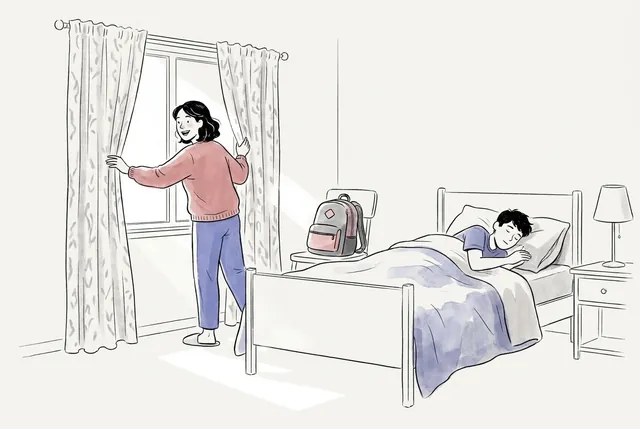
Teen sleep: why teens need more and fall asleep later
How much sleep teenagers need, why their body clocks shift later, what the American Academy of Pediatrics says about school start times and how parents can help.
Sleep tools
How much sleep do you need? Recommendations by age
Recommendations from the American Academy of Sleep Medicine and the National Sleep Foundation.
QuizSocial jet lag calculator
The difference in your sleep midpoint between workdays and days off.
QuizWhen should you stop drinking coffee? Calculator
According to a meta-analysis, have a regular coffee at least about 8.8 hours before bed.
PDF · DiaryTwo-week sleep diary
Record bedtime, wake time, awakenings, caffeine, alcohol and how you feel.
PDF · TrackerMonthly 24-hour sleep tracker
A visual sleep rhythm tracker that shows your schedule and social jet lag.
PDF · ChecklistBedtime routine checklist
A step-by-step wind-down routine with a weekly tracker.