How to quit smoking: the methods with the best evidence
Risky Substances
Key points
- NRT raises the chances of quitting by about 50% to 60% compared with placebo or no treatment.
- Varenicline and combination NRT were the most effective medications in a Cochrane network meta-analysis.
- In the EAGLES trial, varenicline did not increase serious neuropsychiatric events compared with placebo.
- Support (counseling, groups, quitlines) boosts the effect of medications.
Why quitting is hard
Nicotine is highly addictive. Most people who smoke want to quit, and many try several times before succeeding. That is normal; each attempt increases your chances.
What the science says
Nicotine replacement therapy. A Cochrane review of 133 trials found that all forms of NRT (patch, gum, lozenge, inhaler, nasal spray) increased the chances of quitting by about 50% to 60% (Hartmann-Boyce et al., 2018).
Comparing medications. A Cochrane network meta-analysis found that varenicline and combination NRT (a patch plus a fast-acting form) were more effective than single forms of NRT or bupropion (Cahill et al., 2013).
Safety. The EAGLES trial of more than 8,000 people, including people with psychiatric disorders, found no significant increase in serious neuropsychiatric events with varenicline or bupropion compared with nicotine patch or placebo (Anthenelli et al., 2016). The FDA removed the boxed warning for varenicline in 2016.
Benefits start quickly and add up
Within weeks, circulation and lung function improve. After a year, the excess risk of heart disease is about half that of someone who still smokes. Quitting before 40 gains about 10 years of life (Jha et al., 2013).
A 5-step plan
- Set a quit date within the next two weeks.
- Talk to your doctor or pharmacist about medication.
- Get support: call 1-800-QUIT-NOW, text QUIT to 47848 or use the free quitSTART app.
- Prepare: remove cigarettes, lighters and ashtrays; identify triggers.
- Plan for cravings and slips; a slip is not a failure.
When a craving hits
- Wait it out: cravings pass in minutes.
- Drink water, chew gum or use your short-acting NRT.
- Take a walk or do something with your hands.
- Breathe slowly.
- Call a friend or quitline.
Frequently asked questions
How long do cravings last?
Each craving usually passes within 5 to 10 minutes. Physical withdrawal peaks in the first few days and eases over 2 to 4 weeks.
Is it better to quit cold turkey or cut down first?
Both can work. Setting a quit date and using medication and support gives the best odds.
Sources
- Hartmann-Boyce et al. (2018). Nicotine replacement therapy versus control for smoking cessation. Cochrane Database of Systematic Reviews 2019(1). doi:10.1002/14651858.CD000146.pub5
- Cahill et al. (2013). Pharmacological interventions for smoking cessation: an overview and network meta-analysis. Cochrane Database of Systematic Reviews 2015(7). doi:10.1002/14651858.CD009329.pub2
- Anthenelli et al. (2016). Neuropsychiatric safety and efficacy of varenicline, bupropion, and nicotine patch in smokers with and without psychiatric disorders (EAGLES): a double-blind, randomised, placebo-controlled clinical trial. The Lancet 387(10037):2507-2520. doi:10.1016/S0140-6736(16)30272-0
- Jha et al. (2013). 21st-Century Hazards of Smoking and Benefits of Cessation in the United States. New England Journal of Medicine 368(4):341-350. doi:10.1056/NEJMsa1211128
- National Cancer Institute. Smokefree.gov. smokefree.gov
Keep reading
 Risky Substances · Guide
Tobacco, alcohol and addiction: a guide to the risky substances pillar
Why avoiding risky substances is one of the six pillars of lifestyle medicine: what the data say about smoking and alcohol and where to start making changes.
Risky Substances · Myth or factIs any amount of alcohol safe? The myth of the healthy glass of wine
Why newer research does not support the idea that moderate drinking is good for you, what the Global Burden of Disease found and how to cut back.
 Risky Substances
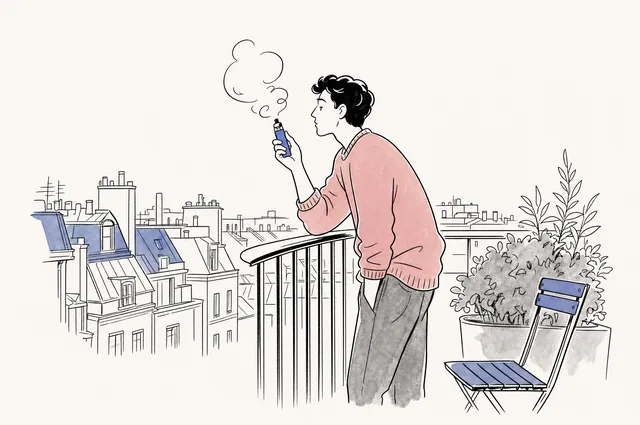
E-cigarettes and vaping: what we know about harms and benefits
Are vapes safer than cigarettes? What a Cochrane review and a NEJM trial found about quitting smoking, why vaping is not safe and why teens should not start.
Risky Substances tools
AUDIT: the WHO alcohol use test
10 WHO questions about how often and how much you drink, and its consequences.
QuizAUDIT-C: quick alcohol check
The first three AUDIT questions: a one-minute screen widely used in U.S. primary care.
QuizFagerström Test for Nicotine Dependence
6 questions to gauge physical dependence on nicotine.
PDF · PlanQuit smoking plan
A personal plan: quit date, reasons, triggers, substitutes and support.
PDF · TrackerSmoke-free days tracker
A monthly tracker with craving ratings and notes.
PDF · DiaryWeekly drink diary
Record how much you drink and in what situations.