Mindfulness: what it is and how to start
Stress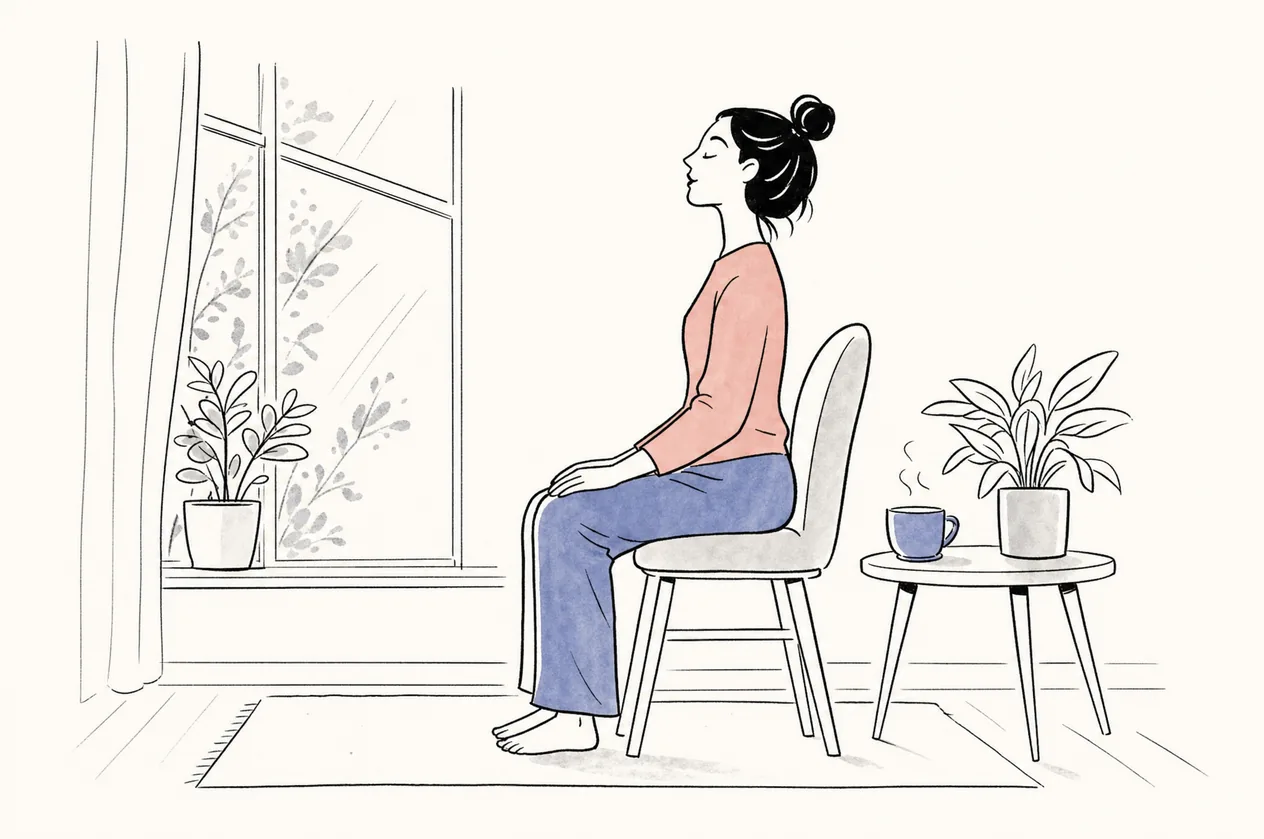
Key points
- Systematic review of 47 trials: meditation modestly reduces anxiety, depression and pain.
- Meta-analysis of MBSR in healthy people: moderate reductions in stress.
- 2023 trial: MBSR was noninferior to escitalopram for anxiety disorders.
- You can start with 5 minutes a day.
What mindfulness is
Mindfulness means paying attention, on purpose, to what is happening right now (your breath, body sensations, sounds, thoughts) with curiosity rather than judgment. It is a skill that improves with practice.
What the research shows
Systematic review. A review of 47 randomized trials with more than 3,500 participants found moderate-quality evidence that mindfulness meditation programs reduce anxiety, depression and pain (Goyal et al., 2014).
MBSR in healthy people. A meta-analysis of 29 studies found that MBSR moderately reduced stress, anxiety and depression and improved quality of life in healthy adults (Khoury et al., 2015).
MBSR versus medication. In a randomized trial of 276 adults with anxiety disorders, an 8-week MBSR program was noninferior to escitalopram (Hoge et al., 2023).
A 5-minute practice
- Sit comfortably and set a timer for 5 minutes.
- Close your eyes or lower your gaze.
- Notice the sensation of breathing at your nose or belly.
- When your mind wanders, which it will, gently bring attention back.
- Finish by noticing how you feel.
How to fit it into your day
- Practice at the same time each day, such as after brushing your teeth.
- Do everyday activities mindfully: drinking coffee, walking, washing dishes.
- Take a “mindful minute” before meetings.
Frequently asked questions
Do I need an app?
No, but apps and free guided recordings can help beginners. Many health plans and employers offer them.
What is MBSR?
Mindfulness-Based Stress Reduction is an 8-week group program developed by Jon Kabat-Zinn at the University of Massachusetts in 1979.
Sources
- Goyal et al. (2014). Meditation Programs for Psychological Stress and Well-being. JAMA Internal Medicine 174(3):357. doi:10.1001/jamainternmed.2013.13018
- Khoury et al. (2015). Mindfulness-based stress reduction for healthy individuals: A meta-analysis. Journal of Psychosomatic Research 78(6):519-528. doi:10.1016/j.jpsychores.2015.03.009
- Hoge et al. (2023). Mindfulness-Based Stress Reduction vs Escitalopram for the Treatment of Adults With Anxiety Disorders. JAMA Psychiatry 80(1):13. doi:10.1001/jamapsychiatry.2022.3679
Keep reading
 Stress
Nature as medicine: how much time outdoors you need
What studies show about green spaces, cortisol and blood pressure, why 120 minutes a week in nature is a useful target and how to get your dose.
 Stress
Burnout: signs, health effects and what helps
How the WHO defines burnout, its three core signs, how it is linked to heart disease, diabetes and depression, and what individuals and workplaces can do.
 Stress
News and anxiety: how to stay informed without burning out
Why hours of distressing news coverage are linked to acute stress, what studies found after the Boston Marathon bombing and COVID-19, and rules for healthy news habits.
Stress tools
PHQ-9: depression screening questionnaire
9 questions about your mood over the past 2 weeks, one of the most widely used screening tools in the world.
QuizGAD-7: anxiety screening questionnaire
7 questions about anxiety over the past 2 weeks.
QuizWHO-5 Well-Being Index
5 statements about how you have been feeling over the past 2 weeks.
PDF · TrackerMonthly mood, energy and sleep tracker
Rate your mood, energy, anxiety and sleep daily on a 1–5 scale.
PDF · CardBreathing techniques card
Step-by-step instructions for cyclic sighing, slow breathing and box breathing.
PDF · CardProgressive muscle relaxation: step by step
A guide to 9 muscle groups to practice before bed.