Sleep: how much do adults need and why it matters for health
Sleep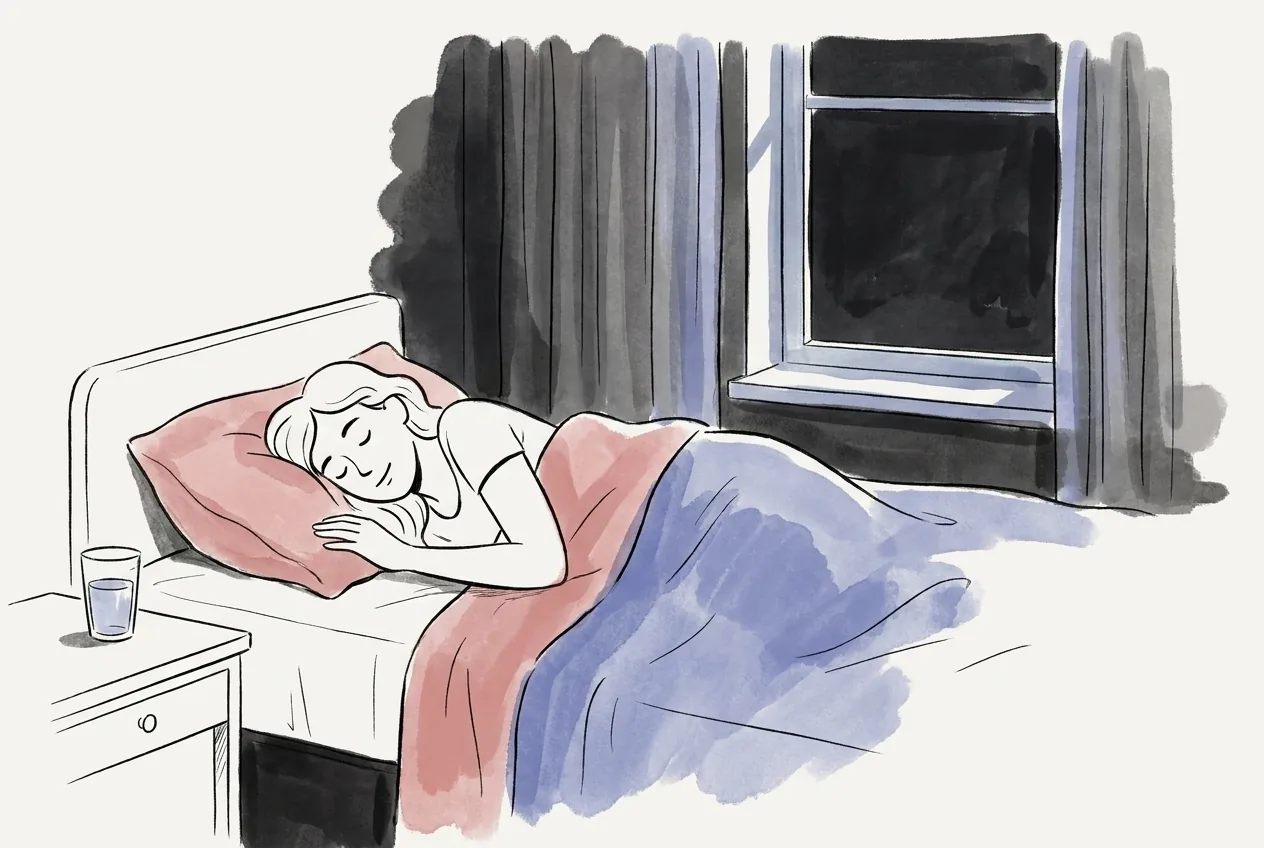
Key points
- AASM and Sleep Research Society: adults should sleep 7 or more hours per night on a regular basis.
- National Sleep Foundation: 7 to 9 hours for ages 18 to 64, 7 to 8 hours for 65 and older.
- Meta-analysis: short sleep was linked to 12% higher mortality and very long sleep to 30% higher (likely as a marker of illness).
- CBT-I improves time to fall asleep and sleep quality and is recommended as first-line treatment for chronic insomnia.
Why we need sleep
During sleep, the brain processes and consolidates information, the body repairs itself, and appetite hormones, blood sugar and immunity are regulated. Lack of sleep worsens mood, concentration and reaction time, and over the long run it is linked to heart disease, type 2 diabetes, obesity and depression. The CDC estimates that about one in three U.S. adults does not get enough sleep.
How much to sleep: the expert consensus
The American Academy of Sleep Medicine and the Sleep Research Society carried out a systematic review of the literature and a consensus vote. Their conclusion: adults should sleep 7 or more hours per night on a regular basis, and less than 7 hours is associated with adverse health outcomes (Watson et al., 2015).
The National Sleep Foundation issued recommendations by age (Hirshkowitz et al., 2015):
| Age | Recommended |
|---|---|
| 14–17 years | 8–10 hours |
| 18–25 years | 7–9 hours |
| 26–64 years | 7–9 hours |
| 65+ years | 7–8 hours |
Short and long sleep
A meta-analysis of prospective studies covering more than 1.3 million people found that short sleep was linked to a 12% higher risk of death, and long sleep (usually more than 8 to 9 hours) to a 30% higher risk (Cappuccio et al., 2010). The authors stress that long sleep probably does not cause harm by itself but is a marker of hidden illness or depression.
Quality matters as much as quantity
Signs of good sleep:
- you fall asleep within about 30 minutes;
- you wake up no more than once a night, or fall back asleep quickly;
- you feel rested in the morning;
- you do not struggle with overwhelming daytime sleepiness.
If sleep will not come: what works
For chronic insomnia, the best-studied non-drug treatment is cognitive behavioral therapy for insomnia (CBT-I). It combines a regular schedule, limiting time in bed, working with the thoughts that keep you awake and relaxation training. A meta-analysis of randomized trials found that CBT-I shortened the time to fall asleep by about 19 minutes, reduced time awake after falling asleep by about 26 minutes and improved sleep efficiency (Trauer et al., 2015). Unlike sleeping pills, the benefits last after treatment ends. The American College of Physicians recommends CBT-I as the first-line treatment for chronic insomnia.
Core habits for healthy sleep
- Go to bed and get up at about the same time, even on weekends.
- Get daylight in the morning and less bright screen light in the evening.
- Limit caffeine in the afternoon.
- Avoid alcohol before bed: it worsens sleep quality.
- Keep your bedroom dark, quiet and cool.
Elsewhere in this section: bedtime routines, caffeine and sleep, and sleeping through anxious times.
Frequently asked questions
How many hours of sleep does an adult need?
At least 7 hours on a regular basis. The recommended range is 7 to 9 hours for ages 18 to 64 and 7 to 8 hours for 65 and older.
Can I catch up on sleep on weekends?
Extra weekend sleep partly makes up for a sleep debt, but big shifts in your schedule disrupt your body clock. It is better to keep a similar wake-up time every day.
Is sleeping more than 9 hours harmful?
Long sleep is linked to higher mortality in studies, but probably because it is often a sign of illness, depression or poor-quality sleep. If you regularly sleep long and still do not feel rested, talk to your doctor.
Sources
- Watson et al. (2015). Recommended Amount of Sleep for a Healthy Adult: A Joint Consensus Statement of the American Academy of Sleep Medicine and Sleep Research Society. SLEEP. doi:10.5665/sleep.4716
- Hirshkowitz et al. (2015). National Sleep Foundation’s sleep time duration recommendations: methodology and results summary. Sleep Health 1(1):40-43. doi:10.1016/j.sleh.2014.12.010
- Cappuccio et al. (2010). Sleep Duration and All-Cause Mortality: A Systematic Review and Meta-Analysis of Prospective Studies. Sleep 33(5):585-592. doi:10.1093/sleep/33.5.585
- Trauer et al. (2015). Cognitive Behavioral Therapy for Chronic Insomnia. Annals of Internal Medicine 163(3):191-204. doi:10.7326/M14-2841
Keep reading
 Sleep
A bedtime routine for better sleep: what really helps
Which sleep hygiene habits are backed by research, why screens delay sleep, a 60-minute wind-down routine and when a routine alone is not enough.
 Sleep
Caffeine and sleep: how many hours before bed to stop
How much caffeine shortens and lightens sleep, the cutoff time recommended by a 2023 meta-analysis and how much caffeine is in common drinks.
 Sleep
Sleeping through stressful times: how to recover when nights are restless
How stress, emergencies and anxious news cycles disrupt sleep, and habits that help you recover: a steady wake time, daylight, limiting news and relaxation.
Related topics from other pillars
Progressive muscle relaxation: a simple technique for anxiety
What progressive muscle relaxation is, what a meta-analysis found about relaxation training for anxiety and a step-by-step 10- to 15-minute routine.
Physical ActivityExercise and sleep: how physical activity helps you sleep
What a meta-analysis of 66 studies found about exercise, sleep duration and sleep quality, and whether evening workouts keep you awake.
StressCBT self-help: does it work without a therapist?
What a meta-analysis found about guided self-help based on cognitive behavioral therapy for depression and anxiety, and how to choose a good program.
Sleep tools
How much sleep do you need? Recommendations by age
Recommendations from the American Academy of Sleep Medicine and the National Sleep Foundation.
QuizSocial jet lag calculator
The difference in your sleep midpoint between workdays and days off.
QuizWhen should you stop drinking coffee? Calculator
According to a meta-analysis, have a regular coffee at least about 8.8 hours before bed.
PDF · DiaryTwo-week sleep diary
Record bedtime, wake time, awakenings, caffeine, alcohol and how you feel.
PDF · TrackerMonthly 24-hour sleep tracker
A visual sleep rhythm tracker that shows your schedule and social jet lag.
PDF · ChecklistBedtime routine checklist
A step-by-step wind-down routine with a weekly tracker.