Helping children sleep after frightening events and emergencies
Sleep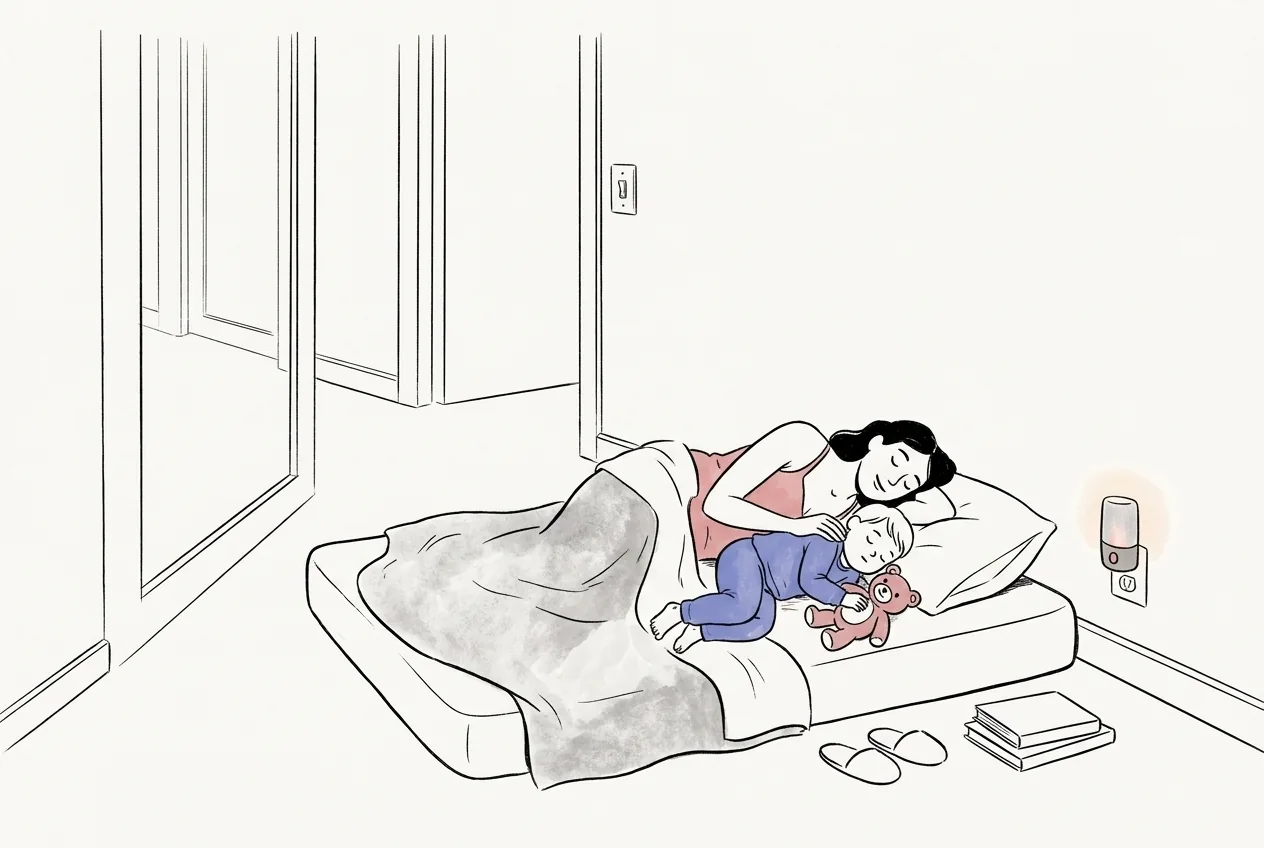
Key points
- Sleep problems are one of the most common reactions in children after trauma.
- A consistent bedtime routine is linked to better sleep in children, and more regular routines bring bigger benefits.
- Prepare an emergency space ahead of time: a blanket, a favorite toy, a flashlight.
- After a scary night, return to a shortened version of the usual routine.
- Persistent nightmares, fear of falling asleep or regression are reasons to see a professional.
How stress affects children’s sleep
A review found that sleep disturbances are among the most common complaints in children after traumatic events: they have more trouble falling asleep, wake more often, have nightmares and fear sleeping alone (Kovachy et al., 2013). Hurricanes, wildfires, house fires, school lockdowns, community violence or frightening news can all trigger this. It is a normal reaction to abnormal circumstances, but children need adult help to get their sleep back on track.
A bedtime routine as an anchor
A study of more than 10,000 families in 14 countries found that a regular bedtime routine was linked to better sleep in infants, toddlers and preschoolers: they fell asleep faster, woke less at night and slept longer. The more consistently the routine was followed, the better the results (Mindell et al., 2015).
A simple 20- to 30-minute routine:
- Dinner and quiet play.
- Bath or washing up.
- Pajamas and brushing teeth.
- A book, a song or talking about the good parts of the day.
- Hugs and goodnight.
Prepare for emergencies
- Know where your family would go and sleep in an emergency and make it cozy.
- Keep a child’s “go bag”: a favorite toy, a flashlight, water, warm clothes.
- Talk through and practice emergency plans during the day, like a game.
During and after a frightening night
- Speak calmly and quietly; your calm helps your child feel calm.
- Offer physical comfort: a hug, a hand on the back.
- Afterward, return to a short version of the routine: water, bathroom, a short song or story.
- Avoid bright lights and screens.
During the day
Children need more sleep than adults: the American Academy of Sleep Medicine recommends 10 to 13 hours (including naps) for preschoolers and 9 to 12 hours for children aged 6 to 12 (Paruthi et al., 2016). After a short night, allow a shorter nap but do not shift the morning wake time too much.
- Keep a regular wake time.
- Make sure your child gets activity and time outdoors.
- Let your child talk about fears, draw or play out what happened; that is how they process it.
Take care of yourself
Children read adults’ emotions. Your own rest and support from other adults are part of caring for your child’s sleep. See also our article on sleeping through stressful times.
Frequently asked questions
Can my child sleep in my bed after a scary event?
During acute stress, temporarily sharing a room or bed can comfort a child. Later, move back gradually, for example by sitting nearby while they fall asleep.
What should I tell my child?
Briefly, honestly and at their level: "We are safe, and I am here." Do not promise what you cannot guarantee, but focus on what you are doing to keep them safe.
Should I give my child melatonin?
Only after talking to your pediatrician. Start with the routine and schedule.
Sources
- Kovachy et al. (2013). Sleep Disturbance in Pediatric PTSD: Current Findings and Future Directions. Journal of Clinical Sleep Medicine 9(5):501-510. doi:10.5664/jcsm.2678
- Mindell et al. (2015). Bedtime Routines for Young Children: A Dose-Dependent Association with Sleep Outcomes. Sleep 38(5):717-722. doi:10.5665/sleep.4662
- Paruthi et al. (2016). Recommended Amount of Sleep for Pediatric Populations: A Consensus Statement of the American Academy of Sleep Medicine. Journal of Clinical Sleep Medicine 12(6):785-786. doi:10.5664/jcsm.5866
Keep reading
Sleeping in a cold home during a winter power outage
How to stay warm at night without heat and avoid danger: layers, sleeping bags, hot water bottles and why generators and stoves must never be used indoors.
Sleep · Myth or factMyth or fact: mouth taping improves sleep
Does taping your mouth shut at night help snoring and sleep? What a systematic review found and who may be put at risk.
 Sleep
Sleeping in the heat: how to rest on hot nights
Why hot nights shorten sleep, who is affected most and what helps: ventilation, a cool shower, light bedding and fans.
Sleep tools
How much sleep do you need? Recommendations by age
Recommendations from the American Academy of Sleep Medicine and the National Sleep Foundation.
QuizSocial jet lag calculator
The difference in your sleep midpoint between workdays and days off.
QuizWhen should you stop drinking coffee? Calculator
According to a meta-analysis, have a regular coffee at least about 8.8 hours before bed.
PDF · DiaryTwo-week sleep diary
Record bedtime, wake time, awakenings, caffeine, alcohol and how you feel.
PDF · TrackerMonthly 24-hour sleep tracker
A visual sleep rhythm tracker that shows your schedule and social jet lag.
PDF · ChecklistBedtime routine checklist
A step-by-step wind-down routine with a weekly tracker.